
Engaging Socially on Social Media

Engaging Socially on Social Media

Being social on social media is about more than just posting; it’s about actively engaging and building genuine connections with others. Think of it as a two-way street, where you not only share your own content but also participate in conversations and contribute to a community. Here’s a breakdown of how to be more social on social media:

1. Engage Actively and Authentically

  • Don’t “Post and Ghost”: Once you’ve posted something, stick around for at least 15-30 minutes to respond to comments and questions. This shows your audience that you value their input and encourages more interaction.
  • Respond to Everyone: Make an effort to reply to all comments and direct messages, if possible. Even a simple “thank you” or a quick emoji can make a follower feel seen and appreciated.
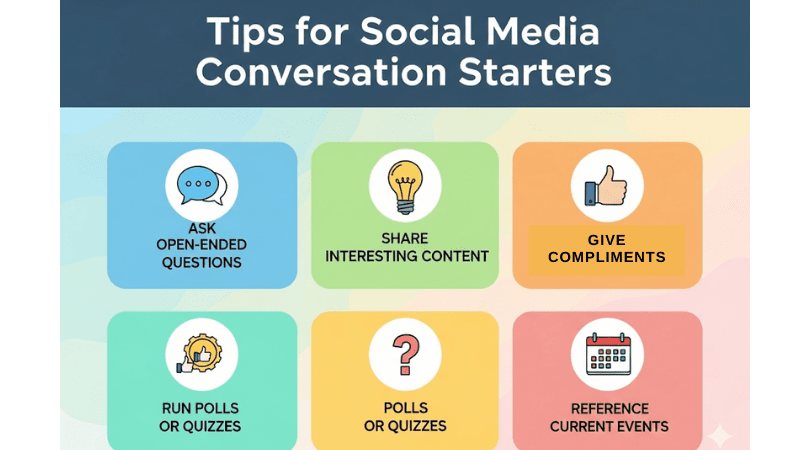
  • Start Conversations: Use calls to action in your posts. Ask questions, like “What’s your favorite part of this?” or “Tell me about your experience with X.” This gives people an easy way to engage.
  • Interact with Others’ Content: Don’t just wait for people to come to you. Actively like, comment on, and share posts from accounts you follow. This builds goodwill and makes you a more recognizable and trusted member of the community.
  • Join Groups and Communities: Participate in relevant groups or forums where people share your interests. This is a great way to find like-minded individuals and contribute to discussions.

2. Be Human and Relatable

  • Share Your Personality: Let your audience get to know the real you. Share behind-the-scenes content, personal stories, and even your mistakes or challenges. This builds trust and makes you more relatable.
  • Keep it Real: Authenticity is key. Don’t feel pressured to always be perfect. People are often more engaged with content that is honest and unpolished.
  • Mix it Up: Don’t just post about your business or a single topic. Share things that inspire you, useful tips, or even a funny meme that’s relevant to your audience. The 80/20 rule is a good guideline: 80% of your content should be valuable or entertaining, and no more than 20% should be directly promotional.

3. Use the Tools of the Platform

  • Go Live: Live video is a powerful tool for connection. You can use it to teach a skill, do a Q&A, or simply chat with your followers in real-time.
  • Use Stories and Reels: These features offer a more casual and candid way to share your life. Use polls, quizzes, and question stickers to encourage easy and quick engagement.
  • Hashtags: Use hashtags strategically to increase your reach and help new people find your content. Use a mix of popular and niche hashtags that are relevant to your topic.
  • Mention Others: When you share content from another creator or partner with a business, mention them in your post. This can increase your visibility and lead to them reciprocating.

4. Practice Good Digital Etiquette

  • Be Respectful: Treat others with kindness and respect. If you disagree with someone, engage in a cordial and logical conversation.
  • Think Before You Post: Remember that once something is online, it’s there forever. Avoid posting anything that is overly negative, inappropriate, or confidential.
  • Proofread: Take a moment to check your spelling and grammar. A polished post can make you appear more professional and credible.
  • Give Credit: If you share content that isn’t your own, always credit the original source. This is important for building relationships and respecting intellectual property.

Defining the “Box” of Thinking

Thinking “outside the box” is a common phrase, but to truly understand it, you first need to define the “box” itself.

The “box” represents the conventional, the familiar, and the established way of doing things. It’s a mental construct that includes:

  • Assumptions and Biases: The beliefs and preconceived notions we hold, often without questioning them. For example, assuming a product must be a certain color or that a service can only be delivered in a specific way.
  • Rules and Constraints: The unwritten and often unquestioned rules that govern our thinking. This can be anything from company policies and industry standards to social norms and personal habits.
  • Past Experiences: The lessons learned from previous successes and failures. While valuable, these experiences can also limit our thinking by making us believe that what worked before is the only way to proceed.
  • Logic and Rationality: While crucial for problem-solving, an over-reliance on pure logic can sometimes stifle creativity. The “box” can be the logical path from point A to point B, ignoring the possibility of a more innovative route.
  • Comfort Zones: The familiar and safe approaches we gravitate toward. Stepping outside the box requires taking risks and exploring the unknown, which can be uncomfortable.

In essence, the “box” is the mental framework we operate within. It’s a product of our education, culture, experiences, and social environment. It provides structure and efficiency, but it can also be a cage that prevents us from seeing new possibilities.

To “think outside the box,” you must first be aware of your own “box” and be willing to challenge its boundaries. This involves questioning assumptions, re-examining rules, and being open to new and unconventional ideas.

Image: Canva Pro

Influencer’s Guide to Audience Empowerment

Guide to Audience Empowerment

Partnering with brands in a way that genuinely aligns with your personal values is crucial for an influencer’s long-term success and credibility. When you  promote products or services that you genuinely believe in, your audience can feel that authenticity, which builds trust and strengthens your community.

Here’s a step-by-step guide on how to partner with brands and create content that genuinely aligns with your values:

1. Define Your Personal Brand and Core Values

Before you even start looking for partnerships, you need to have a crystal-clear understanding of your own brand identity.

  • Identify your core values: What are the principles that you live by? Is it sustainability, community support, health and wellness, creative expression, or something else? List them out.
  • Know your audience: Who are your followers? What do they value? What problems are they trying to solve? The best partnerships are those where your values, the brand’s values, and your audience’s values all overlap.
  • Establish your niche: What are you known for? Are you a travel blogger who focuses on eco-friendly trips? A lifestyle influencer who promotes mindful living? A tech reviewer who champions ethical companies? Your niche will naturally guide you toward relevant brands.

2. Research and Vetting Potential Brands

Once you know your values, you can begin the search for brands that share them. This process is about being proactive and selective, not just waiting for offers to come in.

  • Look for brands you already use: The most authentic partnerships often start with products you already know and love. Think about the products you use in your daily life and consider how you could genuinely incorporate them into your content.
  • Conduct thorough research: Go beyond their homepage. Read their “About Us” page, mission statement, and social media feeds. Look at their past campaigns and the influencers they’ve worked with. Do they practice what they preach? Do they have a reputation for ethical practices, or are they known for controversies?
  • Use influencer marketplaces: Platforms like Aspire, Upfluence, or Collabstr can help you find brands, but you must still vet them yourself. Don’t just apply to every campaign; look for ones that explicitly state values that match yours.

3. Build a Relationship First

Authentic partnerships are rarely transactional. They are built on mutual respect and shared goals.

  • Engage with them on social media: Follow the brands you’re interested in, and consistently like, comment on, and share their content. This shows that you’re a genuine fan and can get you noticed by their marketing team.
  • Create “pre-content”: Before you pitch a brand, create a piece of content (a post, a story, a reel) featuring their product simply because you love it. This demonstrates to them that you already understand their brand and can create high-quality, authentic content.
  • Send a personalized pitch: When you do reach out, don’t use a generic template. Reference specific products you love, a recent campaign of theirs that you admire, and explain how a partnership would be a perfect fit for both of your audiences. Highlight how you can provide value beyond just a sponsored post.

    4. Negotiate for Creative Freedom and Alignment

When a brand is interested in working with you, the negotiation phase is where you ensure the partnership remains true to your values.

  • Request a detailed creative brief: Ask for a brief that outlines their goals, key messages, and deliverables. This will help you understand their expectations and identify any potential red flags.
  • Be honest about your content style: Explain that your content is most effective when it feels natural to your audience. Advocate for creative freedom to integrate the product into your existing content style rather than following a rigid script.
  • Don’t compromise your beliefs: If a brand asks you to promote something that goes against your core values—for example, a non-sustainable product when you’re a sustainability advocate—be prepared to politely decline the opportunity. Remember that one inauthentic partnership can erode the trust you’ve spent years building.

Image: Canva Pro

Strategies for Influencer Community Building

Strategies for Influencer Community Building

An influencer builds a community by shifting the focus from simply broadcasting content to creating a two-way dialogue with their followers. This transforms a passive audience into an engaged group of people with a shared interest.

Key Strategies for Community Building

Authentic Content and Storytelling: Influencers build trust by sharing their genuine experiences, passions, and daily lives. This vulnerability and transparency make them relatable, which is a powerful tool for forging connections. When followers feel they “know” an influencer, they are more likely to trust their recommendations and become part of their community.

Direct and Consistent Engagement: A community thrives on interaction. Influencers actively engage with their followers by:

    • Responding to comments and direct messages: This simple act shows followers that they are seen and heard, making them feel valued.
    • Asking questions in captions: This encourages conversation and invites followers to share their own thoughts and experiences.
    • Hosting live sessions: Livestreams and Q&As allow for real-time interaction, creating a more personal and spontaneous connection.
    • Interacting with other creators: By engaging with others in their niche, they can build a network and introduce their community to like-minded people.

Creating a Shared Space: Influencers can create dedicated spaces for their community to connect with each other, not just with the influencer. This can be done through:

    • Branded hashtags: A unique hashtag can organize user-generated content (UGC) and let followers see content from others in the community.
    • Private groups or forums: Platforms like Facebook or Discord groups offer a more intimate setting where members can connect, share advice, and discuss shared interests.

Empowering the Audience: A strong community isn’t just about the influencer; it’s about making followers feel like they are a vital part of it. Influencers do this by:

    • Featuring user-generated content: Sharing posts from followers who have used a product or participated in a challenge validates their contribution and makes them feel included.
    • Running contests and challenges: Giveaways and interactive challenges not only boost engagement but also encourage active participation within the community.
    • Soliciting feedback: Asking the community for their opinions on content ideas or products makes them feel invested in the influencer’s journey.

Building a thriving community is more than just getting likes and followers; it’s about cultivating genuine relationships and shared experiences. The most successful influencers understand that their audience isn’t a passive group to be marketed to, but rather an active, dynamic community that can be a source of support, ideas, and shared passion. By consistently showing up, listening, and creating spaces for their followers to connect with both them and each other, influencers can transform a simple following into a loyal and engaged community that will support them for the long term.

How to Win at Chess

Chess; How to Win

Winning a game of chess requires a combination of strategy, tactics, and a bit of practice. While there’s no single magic formula, here are the fundamental concepts to help you improve and secure victories.

1. The Goal: Checkmate

The objective of chess is to checkmate your opponent’s king. This happens when the king is under attack (in “check”) and has no legal move to escape the attack. This can involve:

    • Moving the king to a safe square.
    • Blocking the check with another piece.
    • Capturing the piece that is giving check.

If none of these are possible, it’s checkmate, and you win.

2. Basic Strategies for the Entire Game

Think of strategy as your long-term plan, while tactics are the short-term, immediate opportunities. A good strategy creates the conditions for winning tactics.

    • Control the Center: The center of the board is the most important area. Pieces placed here have the most mobility and influence. By controlling the center with your pawns and pieces early on, you can dictate the flow of the game and launch attacks more effectively.
    • Develop Your Pieces: Get your knights and bishops out early. Don’t waste time moving the same piece multiple times. Each piece should have a purpose, whether it’s controlling key squares, preparing for an attack, or defending your position.
    • Prioritize King Safety: A common mistake for beginners is to get so focused on attacking that they forget to protect their own king. A well-defended king is crucial. Castling early is a great way to secure your king and connect your rooks.
    • Avoid Giving Pieces Away for Free: Trading pieces is a normal part of chess, but you should only do it if you get equal or greater value in return. Be careful not to blunder a piece away, as a material advantage is often decisive.
    • Master Pawn Structure: Pawns may be the least valuable, but their formation is key. They create a defensive shield for your king and can open up lines for your other pieces. Connected pawns are strong, while doubled or isolated pawns can be a weakness.

3. Key Tactical Concepts

Tactics are short-term combinations of moves that often result in a decisive advantage, such as winning a piece or delivering checkmate. Learning to spot these is vital.

    • Fork: One of the most common tactics, a fork is when a single piece attacks two or more of your opponent’s pieces at the same time. The knight is particularly good at this.
    • Pin: A pin is when one of your pieces attacks an opponent’s piece, and if that piece were to move, a more valuable piece behind it would be exposed to capture.
    • Skewer: The opposite of a pin, a skewer is when a valuable piece is attacked, forcing it to move and exposing a less valuable piece behind it for capture.
    • Discovered Attack: This tactic involves moving one piece to reveal an attack by another piece behind it. This can be a very powerful way to create a double threat.

4. Practice and Study

Like any skill, practice is the key to getting better.

    • Play Regularly: The more you play, the more you’ll recognize patterns and learn from your mistakes.
    • Solve Tactical Puzzles: This is one of the most effective ways to improve. Tactical puzzles train your brain to spot forks, pins, and other combinations that you can use in a real game.
    • Analyze Your Games: After a game, especially one you lost, take some time to review it. What could you have done better? Where did you make a mistake? This self-analysis is crucial for improvement.
    • Learn from the Masters: Study games by grandmasters to understand how they apply strategic and tactical principles.

Chess is a game of constant learning. Don’t be discouraged by losses—even the best players in the world lose. The goal is to learn from each game and continue to improve your understanding.

Image: Canva Pro

Finding your Influencer Niche: Start with Your Passions and Expertise

Choosing your niche is one of the most critical steps to becoming a successful influencer. A niche is a specific topic or theme you’ll focus on creating content around, and it’s what will set you apart and attract a dedicated audience. While it might seem counterintuitive to narrow your focus, specializing in a specific area is far more effective than trying to be a generalist.

Here’s how to start finding your influencer niche.

1. Identify Your Passions

Start by listing the things you genuinely love. What are the topics you could talk about for hours without getting bored? What do you do in your free time? Think about:

    • Hobbies: Do you enjoy hiking, baking, gaming, or painting?
    • Interests: Are you fascinated by personal finance, sustainable living, or true crime podcasts?
    • Lifestyle: Do you have a unique approach to parenting, organizing your home, or staying fit?
    • Your enthusiasm will shine through and keep you motivated, which is key to long-term success.

2. Define Your Expertise

Think about what you’re good at. You don’t need to be a world-renowned expert, but you should have skills or knowledge that others find valuable. This could be anything from professional experience to a skill you’ve mastered through practice.

    • Professional Skills: Are you a graphic designer who can teach others about branding, a chef who can share easy recipes, or a fitness trainer with workout tips?
    • Personal Skills: Have you become an expert at budgeting, decluttering small spaces, or traveling on a shoestring budget?

Combining your passion with your expertise is a powerful formula. For example, you might be passionate about cooking and an expert at making quick, healthy meals, which is a perfect niche.

3. Consider Your Audience

Even if you’re passionate and knowledgeable about a topic, you need to make sure there’s an audience for it. Do some quick research to see if there’s interest in your ideas.

    • Search Social Media: Use platforms like TikTok, Instagram, and YouTube to search for keywords related to your potential niches. Are other creators making content in this space?
    • Check Hashtags: Look at the number of posts under relevant hashtags. A large number can indicate a popular niche, while a smaller number could mean an opportunity to be a big fish in a small pond.
    • Analyze Trends: Use tools like Google Trends to see if the topic is gaining or losing popularity over time.

By combining your passions, expertise, and a clear understanding of your potential audience, you can find an influencer niche that feels authentic to you and has the potential to grow.

Image: Canva Pro

Art Shows

An art show is a public display of artwork.   

Here’s a simple breakdown:

What it is:

    • A collection of art pieces presented to the public.   Can feature paintings, sculptures, photography, installations, and more.   
    • Can be by a single artist (solo show), a group of artists, or focus on a specific theme.   

Where they happen:

    • Art galleries   
    • Museums   
    • Community centers