Live Streaming 1/5/26

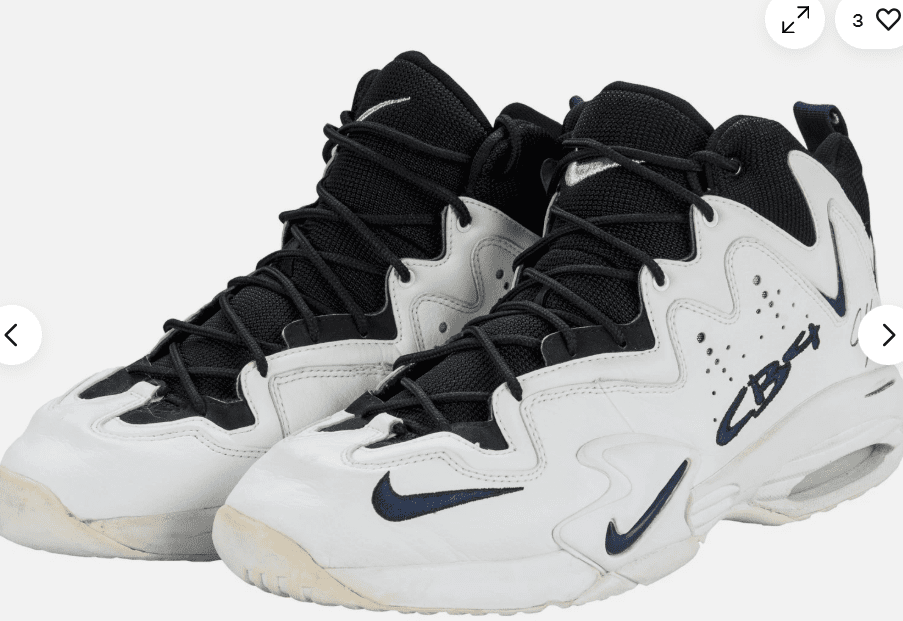
St. Lamont wants to recommend Charles Barkley CB4 shoes to all of you… The Nike Air CB4 (and CB4 II) was Charles Barkley’s signature shoe when he played for the Houston Rockets, featuring a full-grain leather upper, asymmetrical lacing, and a heel-based Max Air unit for impact protection, offering a lower, less bulky design compared to earlier models but still with an edgy ’90s look and an inner sleeve for a snug fit.

Charles Barkley's CB4;s shoes
Charles Barkley’s CB4;s shoes

Live Streaming, 12/29/25

Recently St. Lamont had 171 views during a live streaming, which goes to show that the St. Lamont brand is a growing (and changing) brand. St. Lamont, the brand will be growing and changing next year to meet our audience demands, and the brand will most likely be moving in a slightly different direction, life is always changing… ‘Moving On Up’ like George Jefferson!

Visionary Leadership: Strategy’s Role

Visionary Leadership: Strategy's Role

For a visionary leader, a strategic roadmap is the visual translation of an abstract dream into a concrete sequence of events. While the “vision” is the destination (e.g., “becoming the first company to colonize Mars”), the “strategic roadmap” is the high-level itinerary that tells the team what they are building this year, next year, and five years from now to get there.

1. The Anatomy of a Visionary Roadmap

Unlike a project plan (which lists daily tasks), a visionary roadmap focuses on themes, outcomes, and horizons.

Component Description Example (Vision: Zero-Carbon Transport)
Visionary Horizon The ultimate “North Star” destination. Global leader in emission-free mobility.
Strategic Themes Broad focus areas that organize effort. Battery Tech, Infrastructure, Consumer Design.
Milestones Major “flags” planted in the future. Prototype launch (Q4), 1st Charging Hub (Y2).
Initiatives High-level projects to reach milestones. Partnering with grid providers; R&D for solid-state batteries.
KPIs/Success Metrics Quantifiable proof of progress. 400-mile range; $50k price point; 10k units sold.

2. The “Horizon” Framework

Visionaries often use a Three-Horizon Model to ensure they aren’t just daydreaming about the future while ignoring the bills today:

  • Horizon 1: Maintain & Improve (Today). Maximizing the current business model to fund the future.

  • Horizon 2: High-Growth & Scaling (Tomorrow).  Bridging the gap by launching new ventures or pilot programs.

  • Horizon 3: Radical Innovation (The Vision). The long-term, disruptive ideas that will define the industry in 5–10 years.

3. How to Build One (The 4-Step Process)

To turn your vision into a roadmap, follow this flow:

  1. Work Backward: Start at the 10-year vision. Ask: “What must be true one year before we hit this goal?” Repeat this until you reach today. This is called Backcasting.

  2. Identify “Capabilities”: Don’t just list tasks; list what the company needs to become. Do you need to build a world-class AI team? Do you need a global supply chain?

  3. Group into Phases: Instead of hard dates (which kill creativity), use “Time Buckets”:

    • Now: (Current Quarter) High certainty, tactical execution.

    • Next: (6–12 Months) Planned initiatives, strategic shifts.

    • Later: (1–3 Years) Visionary bets, research-heavy goals.

  4. Define the “Rocks”: Identify 3–5 “Mission Critical” goals for the next 90 days that move the needle. If it doesn’t align with the roadmap, it’s a distraction.

4. Why Visionaries Need This

  • Clarity over Confusion: It prevents the team from feeling like the leader is “chasing shiny objects” by showing how today’s boring work leads to tomorrow’s revolution.

  • Resource Allocation: It provides a “No” to irrelevant opportunities. If a project doesn’t fit on the roadmap, it doesn’t get funding.

  • Investor & Stakeholder Buy-in: It proves to the world that you aren’t just a dreamer; you have a calculated plan to win.


Key takeaway: A roadmap is not a rigid contract; it is a living document. A visionary leader updates the roadmap as market conditions change, while keeping the “North Star” vision constant.

Would you like me to help you brainstorm the “Strategic Themes” or the “90-day Rocks” for your specific vision?

Visionary Mindset: Long-Term Goals

Visionary Mindset: Long-Term Goals

The Visionary Mindset: Anticipating and Shaping the Future

The visionary mindset is a cognitive framework defined by its relentless focus on long-term goals and ideal future states. It transcends simply setting objectives; it is a way of perceiving the world not as it is, but as it could and should be. This perspective is the engine of true innovation, driving breakthroughs that often challenge the status quo and lead entire industries in new directions, as exemplified by figures like Elon Musk or Steve Jobs.

Core Pillars of Visionary Thinking

A visionary approach is built upon several interconnected characteristics:

  1. Future-Oriented Strategic Foresight: Visionaries possess an uncanny ability to read current trends, anticipate disruptions, and look far beyond the immediate horizon. They don’t just react to change; they aim to proactively shape the future. This involves setting audacious, long-term goals that give a clear, inspiring direction (the “what”) while often leaving the “how” open for their teams to innovate.

  2. Unwavering Creativity and Boldness: The visionary is not constrained by conventional thinking. They embrace imagination and innovation, viewing problems as opportunities to create entirely new, non-existent solutions. This requires boldness and strategic risk-taking. They understand that significant growth often lies outside the comfort zone and are willing to weather uncertainty for the sake of their ultimate destination.

  3. Resilience and a Growth Mindset: The path to an ideal future is never straight. Visionaries are characterized by profound resilience, viewing setbacks not as failures, but as essential learning data. They operate with a growth mindset, believing that abilities and intelligence can be developed, allowing them to adapt, incorporate new information, and pivot their strategies without losing sight of the core vision.

  4. Inspirational Communication and Empathy: A vision is powerless unless it is shared. The most crucial skill of a visionary is their ability to communicate the ideal future with such clarity, passion, and emotional intelligence that it inspires deep commitment from others. By tapping into the team’s emotions and aligning individual purpose with the grand goal, they unify people toward a shared mission, turning their abstract dream into a tangible, collective pursuit.

    Impact and Application

Cultivating a visionary mindset leads to transformative results: increased innovation, long-term sustainability, and higher team engagement. It provides the “North Star” that guides daily decisions, ensuring that every short-term action contributes meaningfully to the colossal long-term goal. It transforms an organization from one that simply manages operations into one that actively redefines its own landscape.

Would you like to explore some famous examples of companies or leaders who demonstrate this visionary mindset?

Live Streaming 12.8.25

Living your best life requires a focus on your personal well-being, starting with consistent Self-Care and setting strong Mental Health boundaries to maintain emotional balance. This inner strength must be supported by disciplined attention to your Physical well-being through nutrition, exercise, and sleep. Crucially, these efforts are sustained by Hanging with the Right People—nurturing supportive, positive relationships that amplify your happiness and resilience.

What Will It Take For You to Live Your Best Life

Living Your Best Live

To live one’s “best life” is to find a harmonious balance among many factors.

Here is a breakdown of the importance of each factor, informed by psychological research on well-being and life satisfaction:

1. The Physical Foundation: Health, Sleep, and Food

The physical necessities—Health, Sleep, and Food—are the non-negotiable foundations for all other pursuits. Without them, the ability to enjoy or even work toward the other goals is severely compromised.

  • Health and Sleep: The First Priority: Research unequivocally shows that health is directly tied to happiness ratings. Specifically, quality sleep is recognized as one of the three pillars of health (along with nutrition and exercise). Sleep deprivation is linked to a higher risk of heart disease, diabetes, obesity, and impaired brain functions like memory and emotional control. Therefore, prioritizing quality sleep directly secures long-term health, which is the platform for a long, best life.

  • Food: While essential for survival and energy, in a context of abundance, food also serves a deeply social and pleasurable role. It is the fuel, but its significance is secondary to the restorative function of sleep and overall physical health.

2. The Relationship Core: Happy Children

Happy Children represents the human need for strong, positive, and supportive relationships. Psychological studies consistently identify strong relationships (family, spouse, friends) as one of the most significant determinants of subjective well-being and happiness across all ages, income, and cultures.

  • Relationships provide emotional support, a context for identity, and a profound sense of purpose that transcends the self. The happiness of one’s children (and the relationship with them) often symbolizes success in this vital domain of connection and legacy.

3. The Psychological Need: Feeling of Importance (Purpose)

The feeling of importance is the human need for Meaning and Purpose, which psychologists often distinguish from fleeting happiness (hedonia).

  • This “feeling of importance” comes from intrinsic motivation—an internal drive to do something because the activity itself is personally meaningful and satisfying, rather than relying on external rewards (like acclaim or simple money).

  • Viktor Frankl, a prominent psychologist, noted that those who have a “why” to live can bear almost any “how.” A sense of purpose—serving something larger than oneself or contributing productively to the world—is crucial for long-term self-esteem, resilience, and a deep, lasting life satisfaction.

4. The Practical Enabler: Money

Money is a powerful enabler, not an end goal for the best life.

  • Financial security provides the control and freedom necessary to pursue the foundational priorities. It alleviates chronic stress, allows access to better healthcare, provides quality education for children, and frees up time to focus on purpose and relationships.

  • However, research indicates that once basic needs are met and income rises above the poverty line, increasing amounts of money have diminishing returns on happiness. Its true value lies in how it is used to support health, time, and relationships.

5. The Existential Context: Life in the Hereafter

The Life in the Hereafter (often tied to faith and spirituality) provides the ultimate meaning and hope for many.

  • For those with such beliefs, this framework provides a system of meaning, hope for the future, and a way to cope with suffering, loss, and the inevitable anxiety of mortality. Studies have shown a significant inverse relationship between a strong belief in the afterlife and the severity of certain psychiatric symptoms, including anxiety and depression, particularly when facing major loss.

  • It gives context to the earthly life—the “best life” here becomes one lived in accordance with values that lead to the best life later.

Conclusion

A “best life” is not achieved by maximizing any single factor, but by understanding their hierarchy. Health (including sleep) provides the essential energy and time. Relationships (happy children) provide the deep well of contentment and support. Purpose (feeling of importance) provides direction and resilience. Money is the tool that secures the foundation and provides options. And Beliefs (life in the hereafter) provide the overarching context and peace.

The best life is a cultivated balance, where physical well-being allows for meaningful contributions, which are shared with loved ones, all while living in accordance with one’s deepest values.

Image: Canva Pro

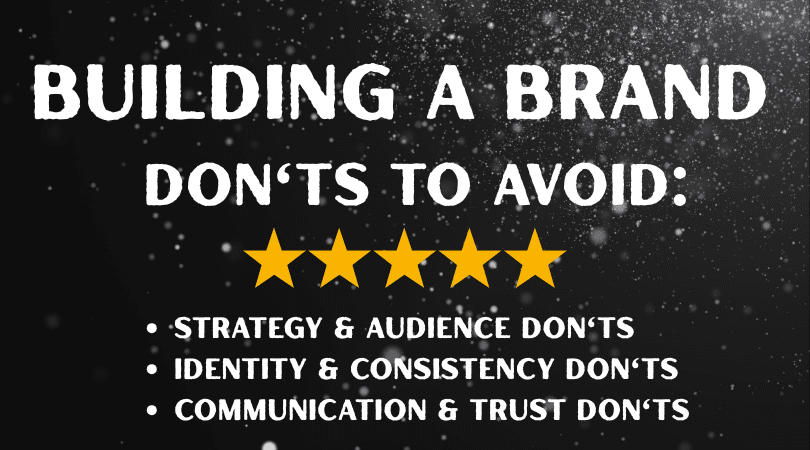
Brand Building: Key Don’ts To Avoid

Brand Building; Don't to Avoid

It’s important to avoid doing certain things when building a brand—focusing on what not to do is often as important as knowing what you should do.

Here are the biggest “don’ts” when building a brand, categorized for clarity:

Strategy & Audience Don’ts

  • DON’T target everyone. When you try to appeal to a broad audience, your message often becomes generic and fails to resonate with anyone specifically. Be niche and focus on your ideal customer (your buyer persona).

  • DON’T lack a clear vision or strategy. A brand is more than a logo; it’s a promise and an experience. Don’t start building before you define your purpose (why you exist), mission (what you do), and core values.

  • DON’T imitate your competition. While you should know what your competitors are doing, don’t just copy them. Your brand needs a Unique Selling Proposition (USP) and an authentic identity to stand out.

  • DON’T focus on the “what” instead of the “why.” People buy why you do something (your belief, your cause) more than what you make. Don’t just sell features; sell the benefit and the big idea.

Identity & Consistency Don’ts

  • DON’T be inconsistent. This is one of the most common and damaging mistakes. Your tone of voice, visuals (colors, fonts, logo placement), and messaging must be uniform across your website, social media, packaging, and all customer interactions.

  • DON’T over-rely on your logo. A logo is an important asset, but it can’t carry the entire brand. Don’t invest all your energy and money in a logo redesign while neglecting other crucial elements like website experience or customer service.

  • DON’T make poor design choices. Your brand needs a visually appealing and professional presentation. Cluttered designs, low-resolution images, hard-to-read fonts, or too many colors will make your brand look unprofessional and get you ignored.

  • DON’T ignore brand guidelines. Whether a simple document or a full brand bible, you need documented rules for how your brand looks and sounds. DON’T let different people represent your brand with different styles.

Communication & Trust Don’ts

  • DON’T make promises you can’t keep. Your brand is your promise to the customer. Don’t exaggerate claims or tie your brand to commitments (like “lowest price” or “fastest service”) that you may not be able to sustain in the long run.

  • DON’T get defensive about negative feedback. Ignoring or arguing with constructive criticism or negative customer reviews is a quick way to damage your reputation. DO listen, respond professionally, and use feedback to improve.

  • DON’T neglect your employees. Your people are your most direct brand ambassadors. DON’T leave them uninformed about your brand vision or fail to train them on how to deliver a consistent brand experience.

  • DON’T choose trends over authenticity. Chasing every temporary trend will make your brand feel disjointed and unoriginal. Stay true to your core values and let your authentic voice shine through.

Which of these “don’ts” feels most relevant to your current challenge?

Brand Building: Execution and Growth

Brand Building: Execution and Growth

Building a brand is a continuous process that involves a clear strategy, consistent execution, and constant monitoring for growth.

Here is a breakdown of the key components for Brand Execution and Growth, structured into three main phases:

1. Strategy & Foundation (The Blueprint)

Before execution can begin, you need a solid, scalable strategy.  This defines who you are, why you exist, and who you’re talking to.

  • Define Your Core Brand Identity:

    • Purpose, Mission, and Values: Why does your company exist (beyond profit)?4 What problems do you solve? What are the non-negotiable guiding principles for your business?

    • Unique Value Proposition (UVP): What do you offer that is genuinely better or different from the competition?

    • Target Audience: Go beyond demographics. Create detailed buyer personas that capture their motivations, pain points, and preferences.

  • Establish Brand Positioning: Define your unique space in the market.  How do you want your brand to be perceived in the minds of your audience relative to your competitors?

  • Create a Brand Style Guide: This is your instruction manual for consistency. It must include:

    • Visual Identity: Logo usage, color palettes, typography, and imagery.

    • Verbal Identity: Brand voice (e.g., formal, playful, authoritative), tone of voice for different situations, and core messaging.

2. Execution (Bringing the Brand to Life)

Execution is about delivering a cohesive experience across every single point of contact. This is where your strategy becomes reality

  • Internal Alignment and Training:

    • Employee Buy-in: Every single employee, from the CEO to the front-line staff, is a brand ambassador. They must understand and embody the brand’s values and mission.

    • Training: Provide regular training on the brand guide, core messaging, and customer service expectations to ensure a consistent experience.

  • Omnichannel Consistency:

    • Touchpoint Audit: Map out every single place a customer or prospect interacts with your brand (website, social media, emails, packaging, sales calls, customer support).

    • Apply Guidelines: Ensure the visual and verbal identity is flawless and consistent across all these channels. Inconsistency erodes trust and awareness.

  • Content and Marketing Activation:

    • Brand Storytelling: Use content (blogs, videos, social posts) to communicate your purpose and values, not just product features.

    •  Authentic engagement builds stronger connections.

    • Digital Strategy: Implement a coordinated digital strategy (SEO, social media, email marketing) that is driven by your brand’s core messages.

3. Measurement & Growth (Scaling and Evolving)

Brand growth is an ongoing cycle of measurement, adjustment, and expansion.

  • Measure Brand Performance: You can’t improve what you don’t measure. Track Key Performance Indicators (KPIs) related to your brand goals:

    • Brand Awareness: How familiar is your target audience with your brand? (Surveys, website traffic, social mentions).

    • Brand Perception/Image: How is your brand viewed? (Customer feedback, sentiment analysis).

    • Brand Loyalty: Repeat purchases, Net Promoter Score (NPS), customer lifetime value.

  • Foster Exceptional Brand Experience:

    • Customer Service: Invest in a customer service experience that consistently delivers on your brand promise.

    • Feedback Loops: Actively seek customer feedback (surveys, reviews) and use it to adjust your execution.

  • Design for Scalability and Flexibility:

    • Build a brand system that can adapt as your business grows—whether you introduce new product lines (brand extension) or enter new markets. Your brand shouldn’t require a complete overhaul every time you expand.

Would you like to dive deeper into a specific phase, such as developing your brand’s unique value proposition or creating a quality control plan for brand execution?


Skip to content