St. Lamont talking about growing into what you were meant to be… finding the passion of what you would like to do daily.

Saint Lamont; Visionary, Chess Player, Artist, Singer, & Fashion Designer
St. Lamont talking about growing into what you were meant to be… finding the passion of what you would like to do daily.
Building a Brand one person at a time, St. Lamont believes it is important to appreciate the people you may influence. St. Lamont says – don’t forget to stop and smell the flowers… and we appreciate our followers.
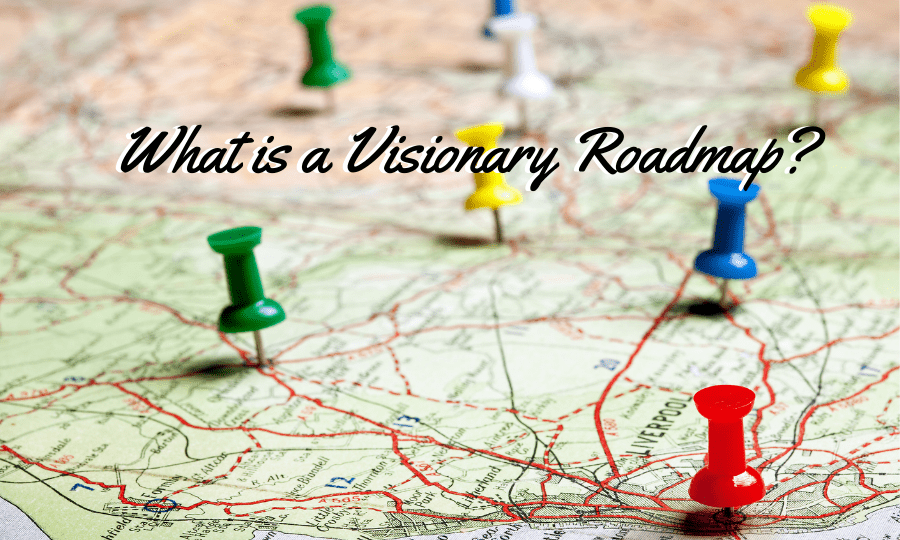
A visionary roadmap is a high-level strategic document that bridges the gap between a bold, long-term aspiration and the tactical steps required to achieve it. Unlike traditional roadmaps, which often function as rigid project schedules or feature checklists, a visionary roadmap focuses on the “why” and the “outcomes” rather than just the “what” and the “when.”
At its heart, a visionary roadmap acts as a North Star for an organization. It translates a company’s strategic vision—an inspiring image of a future state—into a navigable path. Its primary purpose is to maintain alignment across diverse teams, ensuring that daily execution consistently “moves the needle” toward a meaningful destination rather than getting lost in the weeds of incremental updates.
While a tactical roadmap might list specific software bugs to fix or small features to ship, a visionary roadmap outlines strategic initiatives and the major problems a company intends to solve over a multi-year horizon.
To be effective, this type of roadmap must integrate several layers of strategic thinking:
The Vision: This is the ultimate goal. It should be aspirational and easy to communicate, such as “Becoming the leading platform for sustainable tech.”
The Strategy: This defines the overarching approach to achieving the vision. It involves making choices about which markets to enter, which technologies to prioritize, and how to differentiate from competitors.
Strategic Themes: Instead of features, visionary roadmaps are often organized around “themes” or “pillars.” These represent high-level areas of focus, such as “User Growth,” “System Scalability,” or “Market Expansion.”
Milestones and Outcomes: Rather than hard deadlines, visionary roadmaps use milestones to mark the achievement of specific outcomes. For example, instead of saying “Release Version 2.0 on June 1st,” a visionary milestone might be “Achieve 99.9% platform reliability to support enterprise clients.”
The distinction between visionary and traditional roadmaps is fundamental to how an organization operates:
| Feature | Traditional Roadmap | Visionary Roadmap |
| Focus | Output (Features, fixes, tasks) | Outcome (Goals, impact, value) |
| Flexibility | Rigid; changes are seen as delays | Adaptive; tactics change to meet the goal |
| Time Horizon | Short-term (Weeks to months) | Long-term (1–5 years) |
| Audience | Development teams and project managers | Executives, investors, and the whole company |
| Storytelling | A list of “to-dos” | A narrative of growth and transformation |
A visionary roadmap provides several critical benefits that drive long-term success:
Stakeholder Buy-In: It is a powerful communication tool for securing investment or executive support. It shows that the leadership has a clear, well-thought-out plan for the future.
Empowerment and Autonomy: When teams understand the vision and the strategic themes, they are empowered to make their own tactical decisions. They don’t need to be told exactly what to build; they understand the problem they are trying to solve.
Prioritization: In a world of limited resources, a visionary roadmap provides the criteria for saying “no.” If a proposed project doesn’t align with the strategic pillars of the roadmap, it is deprioritized in favor of work that does.
Inspiration: It gives employees a sense of purpose and direction. Knowing that your daily work contributes to a transformative future goal is a significant driver of morale and retention.
Building a visionary roadmap starts with deep reflection on the market and the organization’s strengths. It requires leaders to look past the current fiscal quarter and imagine where the industry is heading. It is a living document that should be revisited regularly to ensure it still reflects the reality of the market while keeping the ultimate destination in sight.
Image: Canva Pro
Live Streaming January 14, 2026… St. Lamont talking about branding moving forward, says he cannot wait to get the products out there. He appreciates the Visionaries AND the haters. St. Lamont is moving forward!
St. Lamont wants to recommend Charles Barkley CB4 shoes to all of you… The Nike Air CB4 (and CB4 II) was Charles Barkley’s signature shoe when he played for the Houston Rockets, featuring a full-grain leather upper, asymmetrical lacing, and a heel-based Max Air unit for impact protection, offering a lower, less bulky design compared to earlier models but still with an edgy ’90s look and an inner sleeve for a snug fit.


For a visionary leader, a strategic roadmap is the visual translation of an abstract dream into a concrete sequence of events. While the “vision” is the destination (e.g., “becoming the first company to colonize Mars”), the “strategic roadmap” is the high-level itinerary that tells the team what they are building this year, next year, and five years from now to get there.
Unlike a project plan (which lists daily tasks), a visionary roadmap focuses on themes, outcomes, and horizons.
| Component | Description | Example (Vision: Zero-Carbon Transport) |
| Visionary Horizon | The ultimate “North Star” destination. | Global leader in emission-free mobility. |
| Strategic Themes | Broad focus areas that organize effort. | Battery Tech, Infrastructure, Consumer Design. |
| Milestones | Major “flags” planted in the future. | Prototype launch (Q4), 1st Charging Hub (Y2). |
| Initiatives | High-level projects to reach milestones. | Partnering with grid providers; R&D for solid-state batteries. |
| KPIs/Success Metrics | Quantifiable proof of progress. | 400-mile range; $50k price point; 10k units sold. |
Visionaries often use a Three-Horizon Model to ensure they aren’t just daydreaming about the future while ignoring the bills today:
Horizon 1: Maintain & Improve (Today). Maximizing the current business model to fund the future.
Horizon 2: High-Growth & Scaling (Tomorrow). Bridging the gap by launching new ventures or pilot programs.
Horizon 3: Radical Innovation (The Vision). The long-term, disruptive ideas that will define the industry in 5–10 years.
To turn your vision into a roadmap, follow this flow:
Work Backward: Start at the 10-year vision. Ask: “What must be true one year before we hit this goal?” Repeat this until you reach today. This is called Backcasting.
Identify “Capabilities”: Don’t just list tasks; list what the company needs to become. Do you need to build a world-class AI team? Do you need a global supply chain?
Group into Phases: Instead of hard dates (which kill creativity), use “Time Buckets”:
Now: (Current Quarter) High certainty, tactical execution.
Next: (6–12 Months) Planned initiatives, strategic shifts.
Later: (1–3 Years) Visionary bets, research-heavy goals.
Define the “Rocks”: Identify 3–5 “Mission Critical” goals for the next 90 days that move the needle. If it doesn’t align with the roadmap, it’s a distraction.
Clarity over Confusion: It prevents the team from feeling like the leader is “chasing shiny objects” by showing how today’s boring work leads to tomorrow’s revolution.
Resource Allocation: It provides a “No” to irrelevant opportunities. If a project doesn’t fit on the roadmap, it doesn’t get funding.
Investor & Stakeholder Buy-in: It proves to the world that you aren’t just a dreamer; you have a calculated plan to win.
Key takeaway: A roadmap is not a rigid contract; it is a living document. A visionary leader updates the roadmap as market conditions change, while keeping the “North Star” vision constant.
Would you like me to help you brainstorm the “Strategic Themes” or the “90-day Rocks” for your specific vision?
St. Lamont Live Streaming 12.15.25 The Importance of Appreciation, giving someone a compliment does not cost a dime, only your time.

The visionary mindset is a cognitive framework defined by its relentless focus on long-term goals and ideal future states. It transcends simply setting objectives; it is a way of perceiving the world not as it is, but as it could and should be. This perspective is the engine of true innovation, driving breakthroughs that often challenge the status quo and lead entire industries in new directions, as exemplified by figures like Elon Musk or Steve Jobs.
A visionary approach is built upon several interconnected characteristics:
Future-Oriented Strategic Foresight: Visionaries possess an uncanny ability to read current trends, anticipate disruptions, and look far beyond the immediate horizon. They don’t just react to change; they aim to proactively shape the future. This involves setting audacious, long-term goals that give a clear, inspiring direction (the “what”) while often leaving the “how” open for their teams to innovate.
Unwavering Creativity and Boldness: The visionary is not constrained by conventional thinking. They embrace imagination and innovation, viewing problems as opportunities to create entirely new, non-existent solutions. This requires boldness and strategic risk-taking. They understand that significant growth often lies outside the comfort zone and are willing to weather uncertainty for the sake of their ultimate destination.
Resilience and a Growth Mindset: The path to an ideal future is never straight. Visionaries are characterized by profound resilience, viewing setbacks not as failures, but as essential learning data. They operate with a growth mindset, believing that abilities and intelligence can be developed, allowing them to adapt, incorporate new information, and pivot their strategies without losing sight of the core vision.
Inspirational Communication and Empathy: A vision is powerless unless it is shared. The most crucial skill of a visionary is their ability to communicate the ideal future with such clarity, passion, and emotional intelligence that it inspires deep commitment from others. By tapping into the team’s emotions and aligning individual purpose with the grand goal, they unify people toward a shared mission, turning their abstract dream into a tangible, collective pursuit.
Cultivating a visionary mindset leads to transformative results: increased innovation, long-term sustainability, and higher team engagement. It provides the “North Star” that guides daily decisions, ensuring that every short-term action contributes meaningfully to the colossal long-term goal. It transforms an organization from one that simply manages operations into one that actively redefines its own landscape.
Would you like to explore some famous examples of companies or leaders who demonstrate this visionary mindset?
Living your best life requires a focus on your personal well-being, starting with consistent Self-Care and setting strong Mental Health boundaries to maintain emotional balance. This inner strength must be supported by disciplined attention to your Physical well-being through nutrition, exercise, and sleep. Crucially, these efforts are sustained by Hanging with the Right People—nurturing supportive, positive relationships that amplify your happiness and resilience.
Saint Lamont is inspired by family, hard work, and abstract design, motivated to help the youth find their purpose in life.